
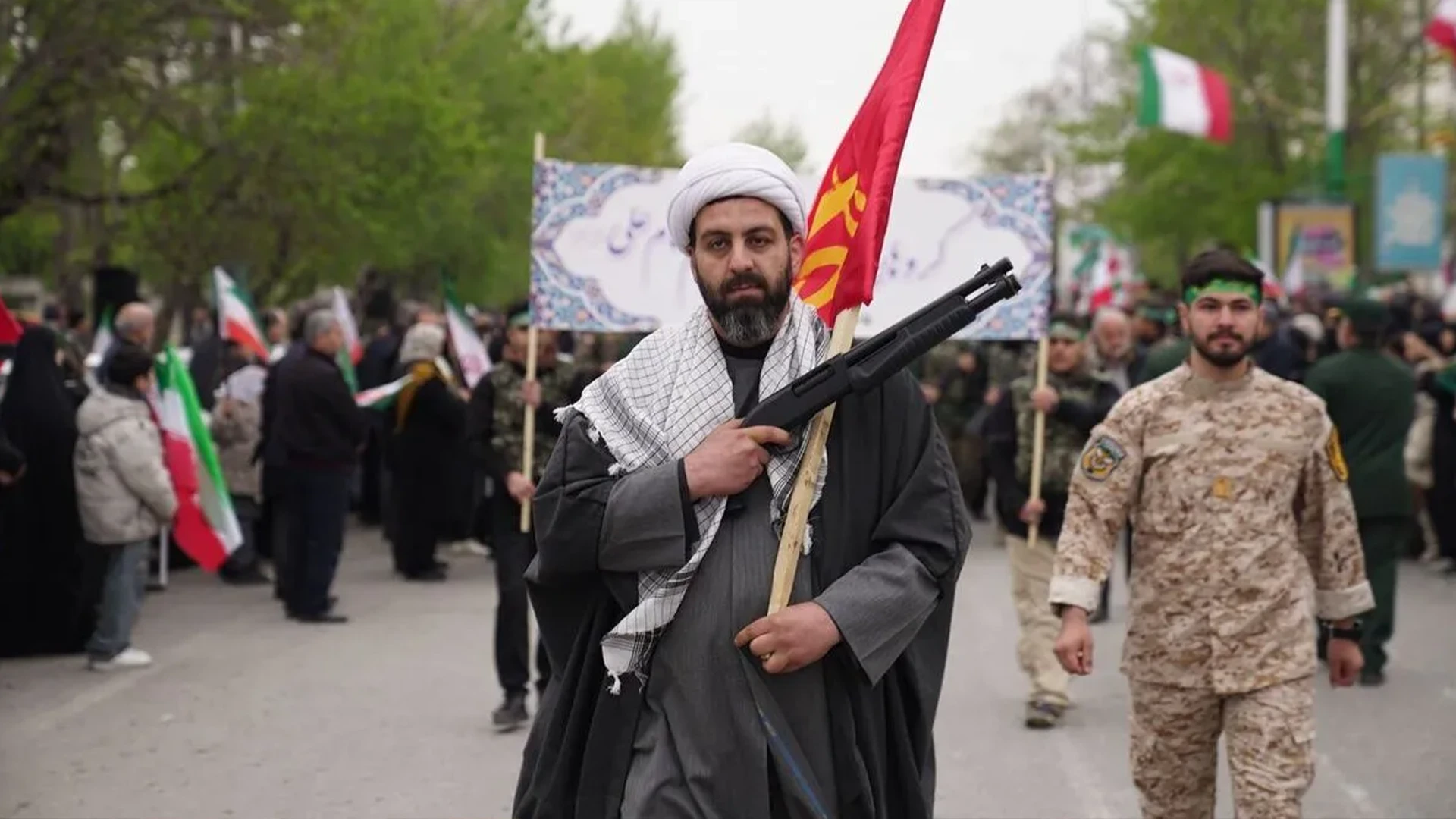
“Fathers and mothers, be aware. If your son, daughter, or anyone today on Iranian soil utters a single word that harmonizes with the enemy… order to shoot them has already been issued.”
- Salar Velayatmadar, Majlis Member and IRGC Brigadier General
Since the devastating outbreak of the US-Iran war on February 28, 2026, global headlines have been saturated with reports of military exchanges, diplomatic discussions, and the high-stakes standoff in the Strait of Hormuz. Yet far from the battlefields, another brutal conflict is raging inside Iran. Under the cover of "wartime conditions," the Islamic Republic has aggressively accelerated its internal machinery of oppression and domestic terror.
An attempt to stifle public anger following widespread anti-regime uprisings – culminating in the murder of at least 7,000 protestors on January 8th and 9th of this year – has continued to evolve into a hyper-securitized dragnet. Global human rights monitors warn that the Islamic Republic is exploiting the cover of wartime vulnerability to wage an all-out campaign against its own citizens, creating a profound human rights emergency.
1. The Security State, Surveillance, and Mobile Checkpoints
Security checkpoints were rolled out under the banner of wartime civil defense immediately after the first attacks occurred on February 28th, 2026. Worse, they were immediately deadly. 15 year-old Ahmadreza Feizi and his 19-year old brother Amirhossein Feizi were reportedly shot and killed by security forces in Alborz province for allegedly honking their car’s horn to celebrate the death of Ali Khamenei. That same day another woman, Kowsar (Nahal) Ahoo Ghalandari, was also shot and killed in Lorestan province when security forces shot at her car while she and several friends were driving nearby, again allegedly celebrating the death of the Supreme Leader.
Beyond the killings, security forces—including the Islamic Revolutionary Guard Corps (IRGC)—routinely conduct highly invasive vehicle searches and demand that citizens unlock their mobile phones. Individuals may be targeted and arbitrarily detained if their personal communications, messaging apps, or social media accounts contain any criticism of the government or anti-war sentiment.
2. Mass Arrests of Dissidents, Students, and Legal Professionals
Arbitrary detentions have expanded dramatically since the onset of the war. According to Amnesty International, some 6,000 people have been arrested since the start of the conflict. Those targeted include an array of civil society groups, journalists, and historically marginalized ethnic minorities, including Kurds and Baluchis.
University campuses in particular have become key domestic battlegrounds. According to reports by the Center for Human Rights in Iran (CHRI), the regime has launched an expansive assault on higher education to preemptively crush student activism. More than a hundred students have been arbitrarily jailed, suspended, or expelled for engaging in peaceful assembly or showing solidarity with victims of the state's prior crackdowns. For example, Amir Mohammad Karimi and Mahyar Eftekhari, polymer engineering students, were targeted in the university purge. While Karimi was being held in detention without access to a lawyer, university authorities issued a formal disciplinary expulsion order against him without ever allowing him to attend his hearing or present a defense.
Further, to ensure detainees like these have limited support, the judiciary has systematically targeted independent defense lawyers, subjecting them to arbitrary arrests and effectively stripping political prisoners of their right to legal counsel. Since the start of the conflict, over 32 defense lawyers have been arrested or prosecuted to deny political detainees representation.
3. The Escalation of Political Executions
Perhaps the most alarming domestic trend in post-war Iran is the weaponization of capital punishment. The judiciary has radically expedited trials in Revolutionary Courts, utilizing the country's execution machine as a tool to terrorize the public into total compliance.
Scores of individuals convicted on vague, politically motivated security charges—such as moharebeh ("enmity against God")—have been executed following grossly unfair trials. Many of those facing imminent execution are young dissidents tied to earlier anti-regime protests, including individuals who were minors at the time of their arrests. While at least 370 total executions have occurred in the first 6 months of 2026 alone, Amnesty International estimates that at least 36 of those individuals have been executed after being convicted of politically-motivated charges. Beyond these, another 78 protesters and dissidents are believed to be at risk of execution.
For example, Naser Bakrzadeh, a 26-year-old Kurdish political prisoner, was secretly executed in Urmia Central Prison without prior notice given to his family or lawyer, following a trial based on confessions extracted under severe physical torture. After the execution, authorities refused to return his body for burial. When his family repeatedly pleaded for his remains, government agents called them by phone and stated: "We executed your son and threw away his body. Go find it yourselves," using enforced disappearance as an added layer of psychological torture against grieving relatives.
How You Can Help
The Iranian people deserve to have their basic freedoms and human rights respected – especially during times of war and crisis. United for Iran helps make this possible by shining a light on human rights abusers through our Iran Prison Atlas (IPA) project. Our team compiles profiles on every political prisoner, the judges and justice system which persecutes them, and monitors prison conditions to report on abuses. We’ve kept up this pressure for over 14 years, and between 2012 to 2025, United for Iran and the IPA was cited or credited 21 times across 15 official UN and US State Department human rights documents.
If you’d like to support us in this mission, you can donate or subscribe to our email list to learn more about our work.