
In January 2026, Iran went dark.
Following days of nationwide anti-government protests, authorities launched a violent crackdown and imposed a near-total internet blackout. Mobile data disappeared. Messaging apps stopped working. News sites vanished. The blackout was not just about controlling protests—it was about erasing evidence, isolating communities, and preventing the world from seeing what was happening on the ground.
For millions of Iranians, the loss of internet access meant more than inconvenience. It meant being cut off from emergency information, from family and friends, and from any safe way to document or share what they were experiencing. In a country where digital surveillance is already pervasive, the blackout amplified fear: even limited communication could put lives at risk.
Yet, as the government attempted to silence the population, a parallel effort was underway beyond Iran’s borders. Iranian activists, technologists, and civil society organizations began working urgently to provide alternative, safer ways for people to communicate under extreme restrictions.
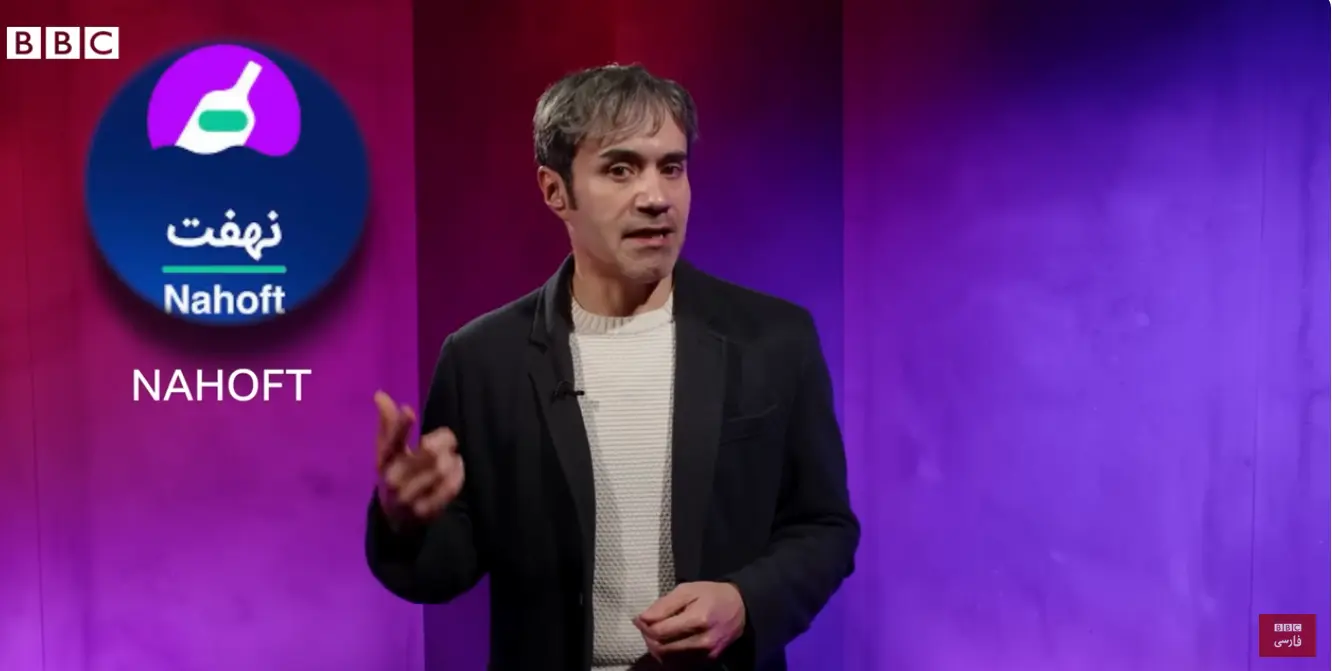
One of those efforts came into public view on January 27, when BBC Persian’s widely watched technology program Click dedicated an episode to secure communication during internet shutdowns. The program explored how people living under censorship and surveillance could still exchange information safely when conventional tools fail.
Among the technologies featured was Nahoft, a secure encryption app developed by United for Iran (U4I).
Nahoft was designed specifically for environments like Iran, where surveillance is constant, and suspicion itself can be dangerous. Unlike standard messaging apps that may be blocked, flagged, or monitored, Nahoft focuses on discretion as much as encryption.
The app allows users to encrypt private messages into ordinary-looking Persian text or to hide encrypted messages inside images. These messages can then be sent through any existing messaging platform. To an outside observer, the communication appears harmless. To the intended recipient, it contains a secure, encrypted message.
This approach matters. In Iran, digital repression not only targets what people say, but also how they communicate. The mere use of certain apps can attract attention. Nahoft helps users avoid that risk by blending secure communication into everyday digital behavior.
BBC Persian’s decision to feature Nahoft reflected a growing public demand for practical tools that work in real-world conditions—not ideal ones. For viewers inside Iran and across the diaspora, the program offered something rare during a blackout: usable information, shared at the moment it was most needed.
For U4I, the recognition underscored years of work focused on digital rights and freedom of expression in Iran. Nahoft was not built as a theoretical solution, but as a response to a recurring reality—one in which internet shutdowns, surveillance, and repression are deployed as tools of control.
U4I is proud that Nahoft is among the tools available to the Iranian public during moments of crisis. When the state shuts down the internet to silence people and conceal abuses, secure communication becomes an act of survival—and of resistance.
The blackout may have cut the connection. But it did not end the conversation.
Learn more about Nahoft at:
https://nahoftapp.com/index-en.html
You can watch the full episode of BBC Persian's Click in Persian here: